RESEARCH
We research the sound of a future to fall in love with.
VVSSL’s research
begins with a question
Sometimes it emerges from within our own practice. Sometimes it is brought to us by a partner, an institution, a community, or an artist seeking a deeper understanding of what is occurring in their process.
In either case, we ask what this medium can reveal. Those questions span a wide range of contexts: organisational, civic, environmental, commercial, artistic. What connects them is the same underlying need: for connection to ourselves, to each other, and to the environments we inhabit.
Our three active research threads reflect that range.
Spatial Listening & Neuroaesthetics
VVSSL's work in spatial listening draws on current knowledge in psychoacoustics and embodied perception. Co-founder Holger Stenschke leads research infrastructure at the Max Planck Institute for Empirical Aesthetics, where teams investigate perception and aesthetic experience, a background that informs how VVSSL situates its format development within scientific inquiry. This work draws on an emerging body of research that understands resonance not as metaphor but as a precise model for how human beings interact with their environments: a dynamic, interdependent process occurring between a person and a space
The question at the core of this thread: what happens, physiologically and perceptually, when people share a spatial sound field?
Experiments including Coragem Heartrate Convergence Pavilion and the Brafe Lab initiative develop and test methods for measuring this in live settings.
Biometric Sonification
Our bodies produce sound: heartbeats, breath, the electrical activity of the brain. VVSSL develops systems that capture these physiological signals in real time and translate them into spatial audio events, distributed across a shared listening environment. Each person’s biology becomes part of a collective sonic field. This thread is grounded in advanced biosignal processing and non-invasive sensing, and connects to research into the affective, haptic, and kinaesthetic dimensions of human experience: the ways in which physical sensation, movement, and biological rhythm shape how we perceive and relate to one another.
Biometric sonification is applied in both the Coragem Heartrate Convergence Pavilion installation and our Brafe Lab frequency research.
Acoustic Urbanism
Sound defines how we experience the spaces we move through together, yet it remains one of the least considered dimensions of urban and architectural design. VVSSL investigates the relationship between sound, built environment, public space, and community, drawing on an emerging field that asks how design can shift attention from fixed forms toward dynamic, interactive fields of social and sensory engagement.
Where architecture has historically been concerned with objects, this research is concerned with interactions: the conditions under which resonance between people and place becomes possible. This thread connects directly to VVSSL’s site-specific format development and to partnerships with municipalities, cultural institutions, and architectural practices.
Current Experiments
Brafe Lab
Fundamental Frequency
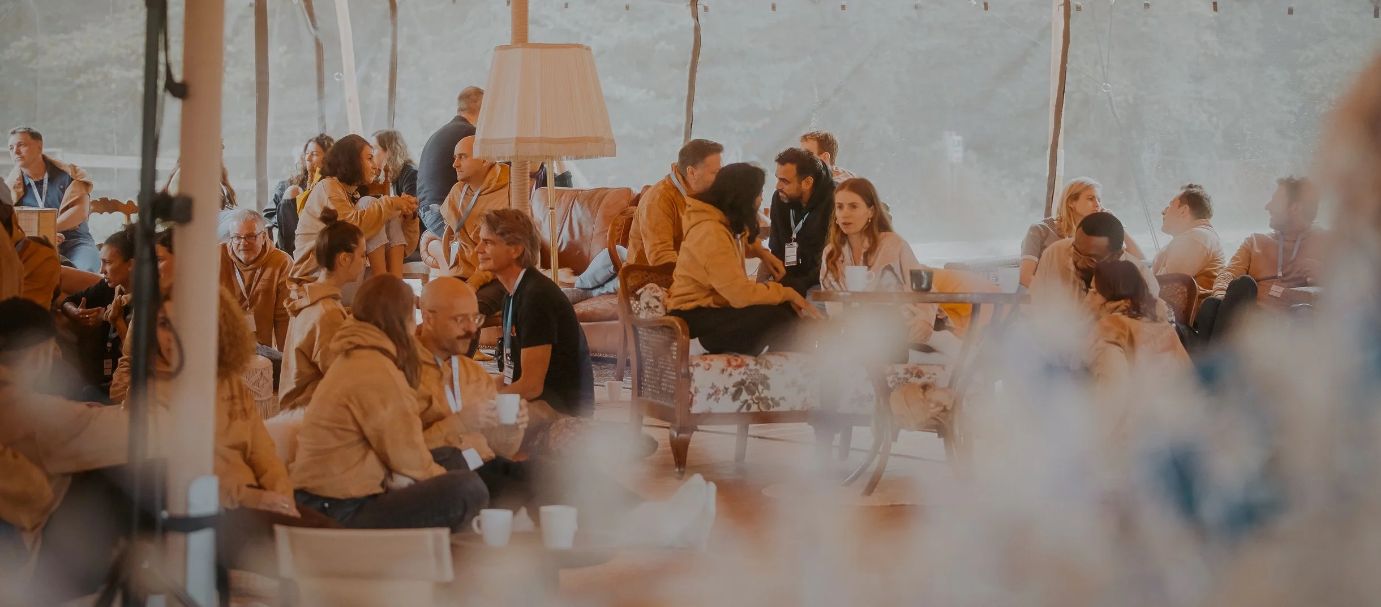
VVSSL is conducting a listening laboratory together with volunteers from the Brafe Space community in Berlin.
The premise: a coherent community, understood as a living landscape, may have a fundamental frequency — a root note upon which its collective identity resonates. Landscape contains memory. Considering the Brafe community as such a landscape, the lab attempts to locate its frequency through direct physiological measurements.
Volunteers attend in groups at a temporary quadraphonic lab installed at the Brafe Space offices. Each session plays a series of frequencies through the Tetra Sonus system. Participants are given wearable sensors, capturing a diverse array of physiological and neurological responses in real time.
The frequency identified becomes the foundation of a deep listening experience composed as an artistic commission for all 200 participants at Brafe Camp 2026. The session will be recorded in three-dimensional sound, creating a spatial document participants can return to throughout the year.
Resonant Inheritance
Artistic Research by Kyoka
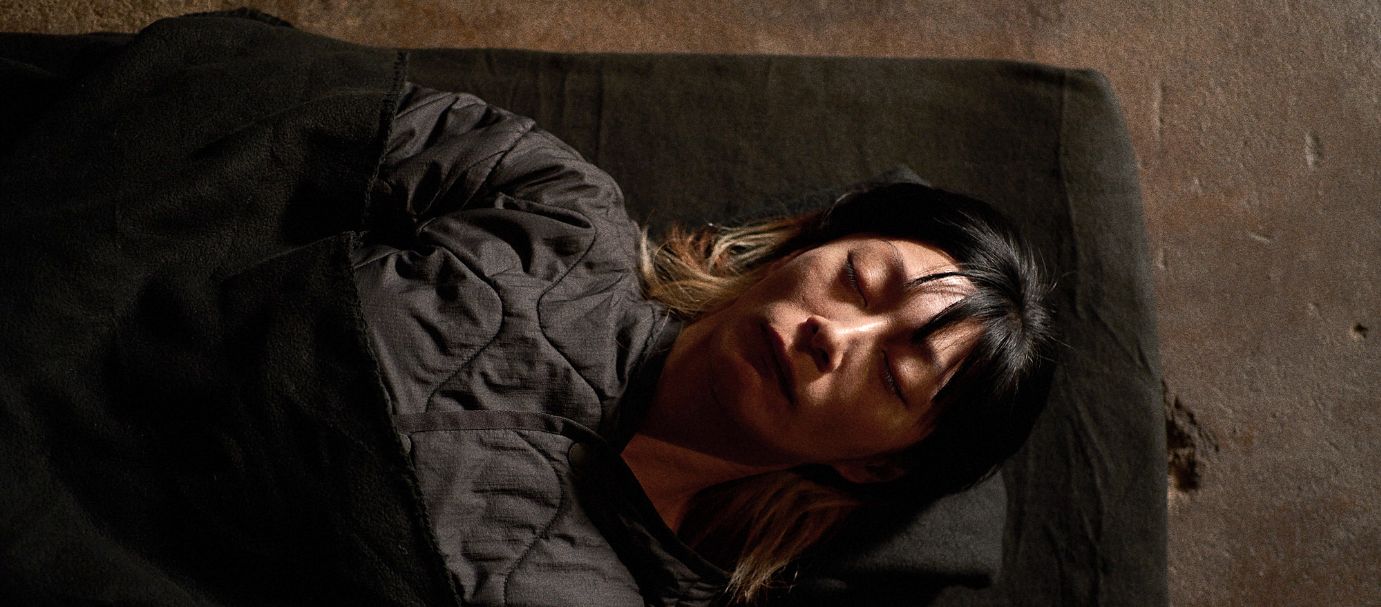
Artist and composer Kyoka, whose commissioned work appeared in the Terra Sonus premiere at the Feuerle Collection, is conducting a research residency exploring themes that align closely with the work of the Max Planck Institute for Empirical Aesthetics. The project, under working title Resonant Inheritance, investigates how individual experiences of loss, memory, and transformation leave traces in biological and environmental systems, and whether those traces can be made perceptible through sound, light, and embodied perception.
The research draws on ecological data from Swiss Federal Institute for Forest, Snow and Landscape Research including forest DNA, mycelium networks, and climate observations, translating these into sonic and spatial structures.
Key approaches include DNA sonification, Motion Induced Blindness installations that reveal the gap between recorded fact and remembered experience, and analogies between forest systems and neural structures.
The project addresses questions that sit at the heart of VVSSL’s own research practice. How do experiences persist within structured systems? Can scientific and artistic methods together make those traces apparent?
Tetra Sonus - System
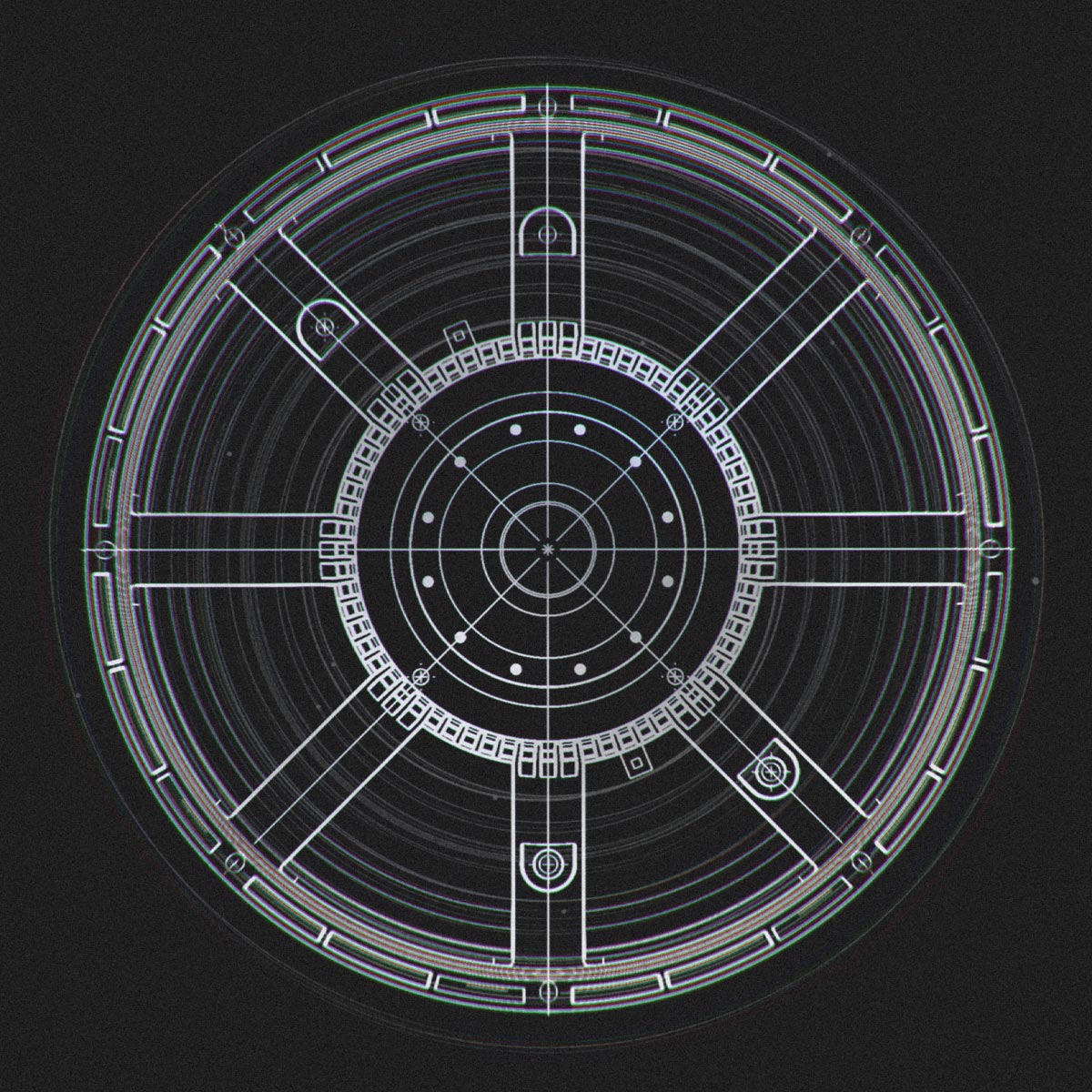
Together with Terra Sonus UG, VVSSL is researching and developing the Terra Sonus system: a wireless, object-based spatial audio system designed to make immersive sound portable, screen-free, and independent of algorithmic platforms.
The research addresses what becomes possible when immersive sound is treated as a primary medium in its own right and one that can be experienced anywhere, anytime.
Drawing on VVSSL's immersive sound content, engineering and ongoing work in spatial audio, shared presence, and new media formats, the project explores how sound behaves across different environments, how people orient within a shared spatial sound experience, and what forms of interaction and distribution might emerge when the listening experience is sovereign and tactile..
Terra Sonus is currently in active research and prototype development in partnership with Terra Sonus UG.
Coragem
Heartrate Convergence Pavilion
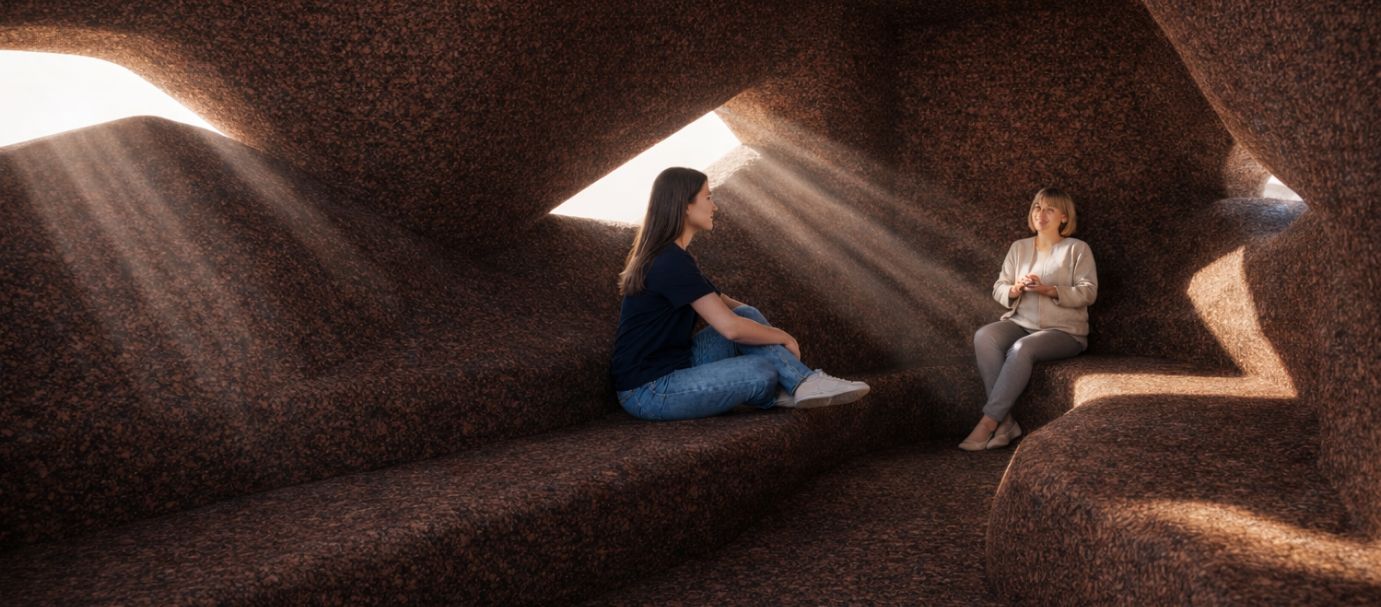
CORAGEM is a mobile listening pavilion that transforms human heartbeats into a shared acoustic experience. Inside a sculpted cork interior, discreet sensors detect the pulse of each visitor without requiring any wearable device. The heartbeats are translated into spatial sound and gently placed within the room, allowing visitors to perceive their own rhythm and the rhythms of others.
As people enter the pavilion, their heartbeats begin to overlap and interact, creating a collective soundscape generated entirely by those present. The experience unfolds without instructions or screens. Visitors gradually realise that the sound they hear is their own heartbeat and those of others sharing the space. CORAGEM invites participants to slow down, listen, and become aware of their presence within a shared environment.
The sonic world of CORAGEM is developed in close collaboration with a commissioned sound artist and sound designer, whose work shapes the aesthetic and emotional character of the experience. The biometric data gathered by the pavilion becomes their compositional material: raw biological signals transformed through artistic process into something that can be perceived.
Developed in collaboration with SPINN (Spatial Innovation Network, Portugal) for Évora 27, the pavilion is grounded in psychoacoustics and embodied perception, drawing on current research methodologies in empirical aesthetics.