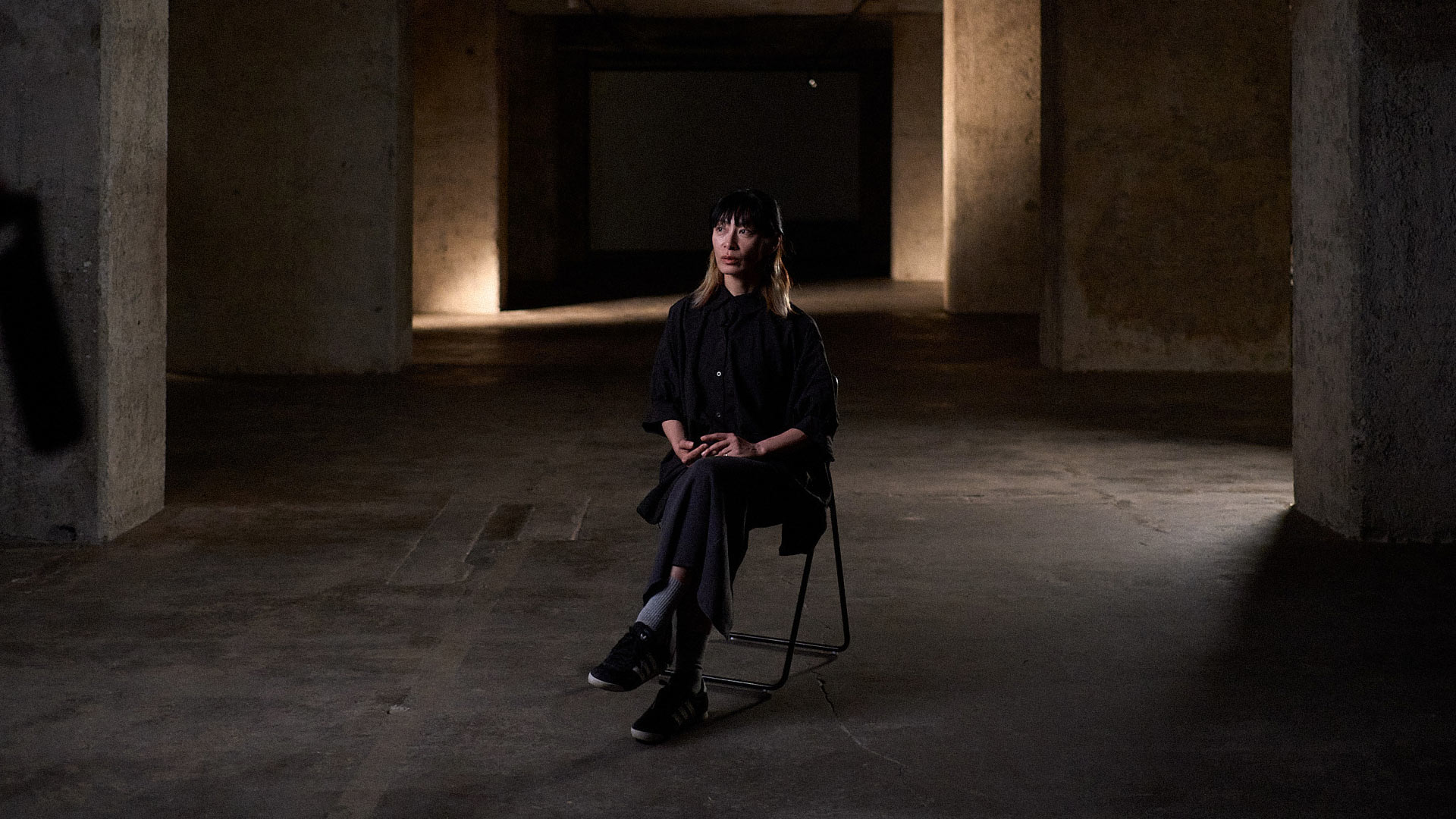
An Interview with Kyoka
Joanna Petkiewicz speaks with composer-researcher Kyoka about her ongoing research piece Resonant Inheritance, tracing her path from sonic minimalism to sleep research, Resonant Drift at the Feuerle Collection, and DNA sonification.
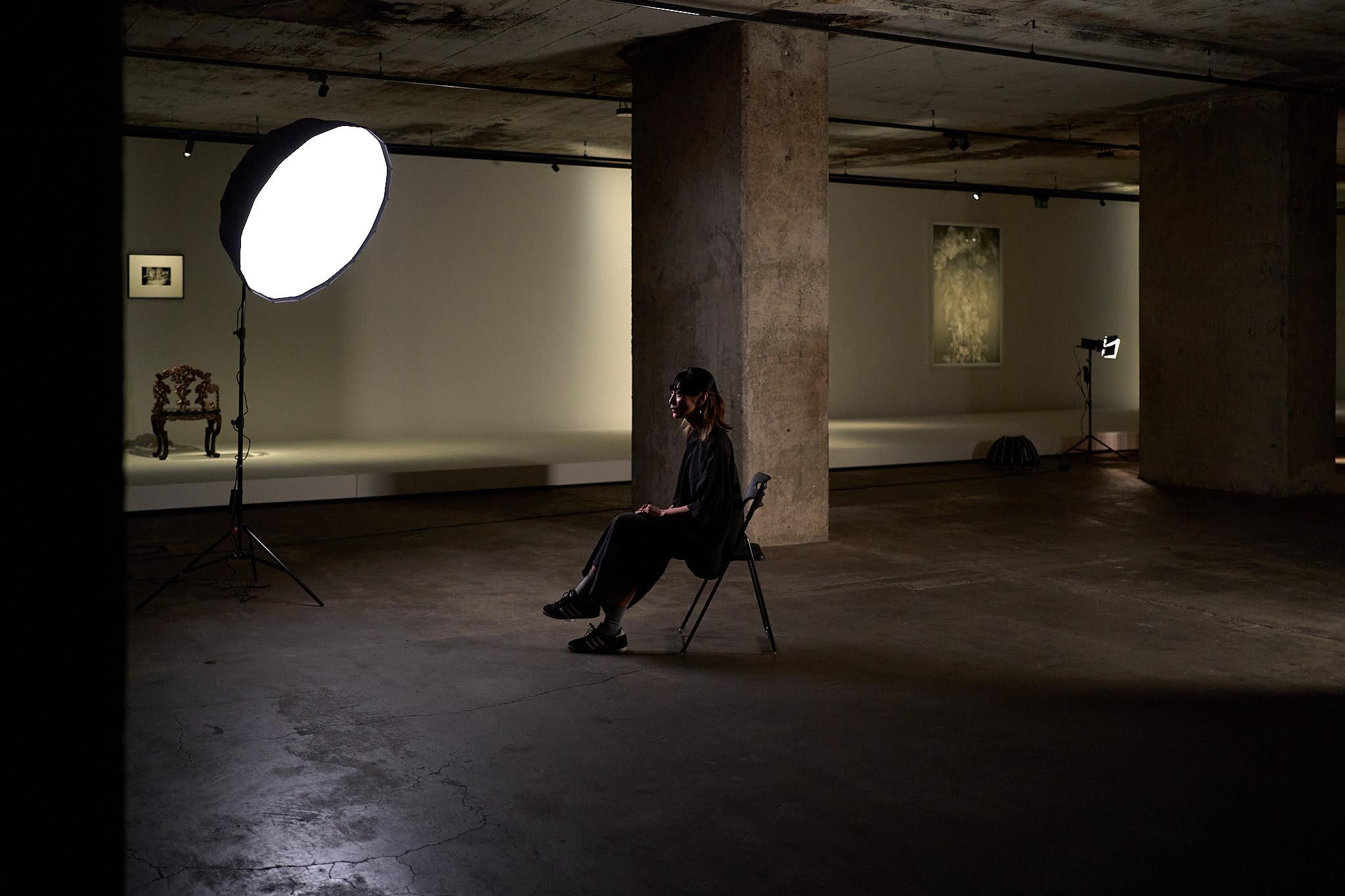
On the arc from being a musical artist to the current chapter as artist-researcher
Joanna: You built a significant artistic identity and a body of work as a musician/composer/techno producer on a raster-noton (now raster), a label with a very specific aesthetic language. What took you out of that frame into burning research questions of sonic nature and to the place where you are now and your current process?
Kyoka: The transition into my current practice felt very natural. Through many years of composing and performing, I was constantly developing questions about the structure of sound itself, and about the relationship between sound and the human body.
In a way, every concert was already an experiment.
What changed is that now I’m in an academic environment where I can deepen and accelerate that process and to examine these questions more systematically.
At the same time, I don’t see this as a separation. I can always move back into artistic contexts, and ideally, I want to move freely between both.
Joanna: How did the idea for Resonant Drift emerge? When did you first sense that sleep was becoming the actual subject of your work?
Kyoka: Actually it was very personal. I originally had difficulty falling asleep. But I noticed that after yoga, during shavasana, I could fall asleep very naturally. That made me curious, so I began exploring the relationship between the nervous system, the environment, and sound through composition. As a result of this exploration I personally started to sleep better.
So I simply wanted to share that experience with others. But because I made that sound for myself it did not mean it will work for everyone and it wanted to know whether it could. So I wanted to understand and research that.
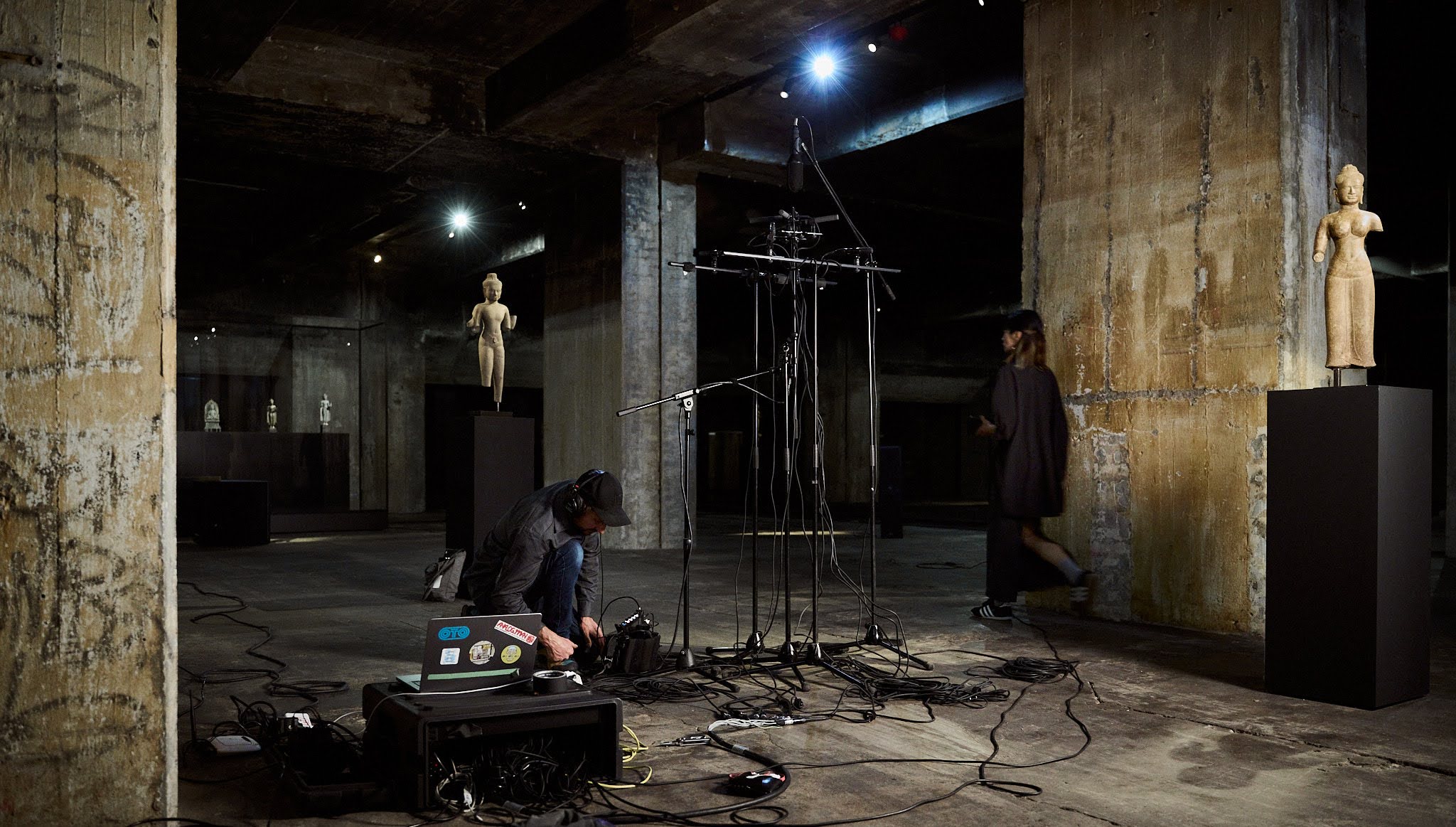
An Interview with Kyoka
On Resonant Drift as part of Tetra Sonus at the Feuerle Collection
Joanna: How did The Feuerle Collection space become a collaborator in your work?
Kyoka: The space itself was very unique, so I focused on naturally integrating the work into it. Rather than imposing something onto the space, I tried to let the work emerge in dialogue with it. I also tried to imagine the sound getting integrated with the objects, with the statues. Not to be in conflict with them but be with them.
Joanna: Liminal space between wakefulness and sleep - what does that threshold actually mean to you as a compositional space?
Kyoka: I’m interested in how sound can support the nervous system in returning to a balanced state which we might call homeostasis. The liminal space between wakefulness and sleep is where this regulation becomes very visible
Not only just keeping balance. Sometimes, for example, our body temperature is not 36 degrees, sometimes it goes up to 38 degrees but then, our body starts to work to reduce the heat. So not only staying in the same place, but also there is a kind of power in the body to bring us back to the comfortable state. I feel like I want to kind of trust that kind of capability of the body to bring us to the natural, comfortable place.
Joanna: How did The Feuerle Collection space become a collaborator in your work?
Kyoka: The space itself was very unique, so I focused on naturally integrating the work into it. Rather than imposing something onto the space, I tried to let the work emerge in dialogue with it. I also tried to imagine the sound getting integrated with the objects, with the statues. Not to be in conflict with them but be with them.
Joanna: Liminal space between wakefulness and sleep - what does that threshold actually mean to you as a compositional space?
Kyoka: I’m interested in how sound can support the nervous system in returning to a balanced state which we might call homeostasis. The liminal space between wakefulness and sleep is where this regulation becomes very visible
Not only just keeping balance. Sometimes, for example, our body temperature is not 36 degrees, sometimes it goes up to 38 degrees but then, our body starts to work to reduce the heat. So not only staying in the same place, but also there is a kind of power in the body to bring us back to the comfortable state. I feel like I want to kind of trust that kind of capability of the body to bring us to the natural, comfortable place.
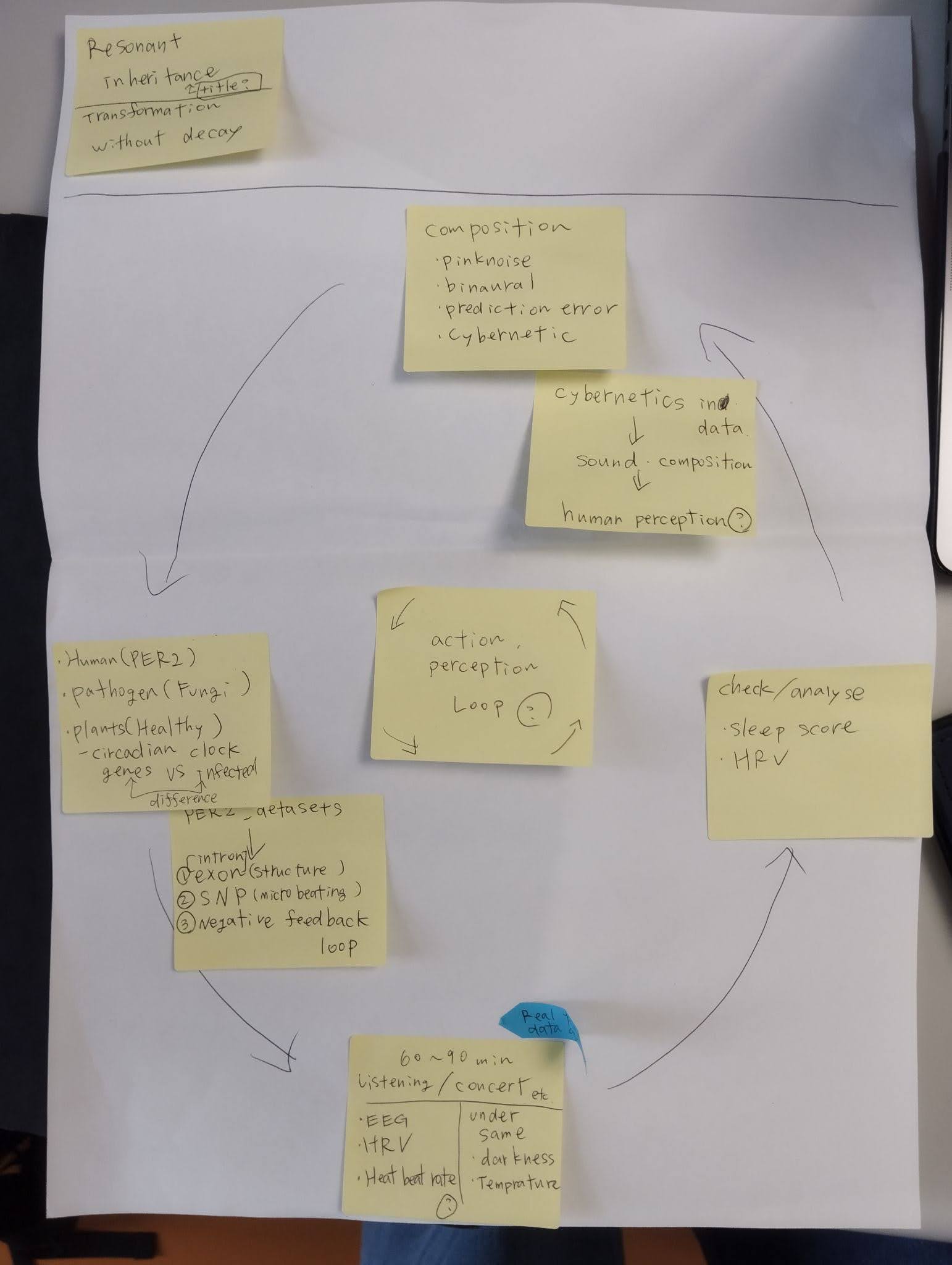
On core concepts of New research thread with Max Planck Institute for Empirical Aesthetics and Data Sonification
Joanna: Transformation without Decay - this is central to your current research. Can you walk me through what you mean, with a concrete example? Because decay is normally understood as part of transformation, what exactly are you resisting or reframing?
Kyoka: In many cases, transformation is understood as something that involves loss or decay. But in biological systems, transformation often works differently. For example, when we have a fever, the body raises its temperature to fight a virus, and then returns to balance. Also, evolution itself is based on transformation through interaction and adaptation, not simply decay. So I’m interested in forms of transformation that sustain or reorganize stability, rather than diminish it.
Joanna: Resonant Inheritance as a title carries ideas of what gets passed down genetically, culturally, generationally. Can you talk about the resonance and inheritance as concepts that you use in your current research?
Kyoka: I see inheritance not only as something personal, but as something accumulated over a very long time. From the emergence of the first DNA, through proteins, organisms, and all forms of life, there is a continuous layering of information, like the rings of a tree. I feel that we are part of that continuity.
I’m interested in reflecting on and engaging with all the elements that have accumulated to form who we are in the present, both positive and negative. Of course, there are personal layers behind this, but I don’t foreground them explicitly in the work.
Joanna: You describe DNA not as a sample but as a "dynamic variable." Can you explain what that distinction actually means in practice?
Kyoka: In my work, DNA is not treated as a fixed sample. Instead, it functions as a dynamic variable, which is something that continuously influences and reshapes the system. So rather than “playing” DNA, I use it as a set of evolving conditions that affect how sound behaves.
Joanna: The Resonant Inheritance as a research seems to be pulling together a few threads. There's the sleep work, where humans fall asleep to music, and then there's this new strand you're developing with the WSL (the Swiss Federal Institute for Forest, Snow and Landscape Research). They seem to be converging into something larger. You also mentioned these three phases and the idea of harmonic coherence. I'm curious how sleep research and forest research come together under this new research framework.
Kyoka: I'm actually still in the process of making sense of it myself. Before I can build a full narrative around it, I need to complete the sonification of the DNA data. But my instinctive interest, my working hypothesis goes something like this:
Take the circadian clock gene in humans-it regulates our internal body clock. That felt like a natural starting point, because it's a system that literally keeps time within us so when sonified, it might produce something that feels inherently natural to listen to.
The second material I chose was pathogen fungi DNA, and that one interested me for a different reason. When we're healthy, the body functions smoothly, almost linearly. But when disease enters, the body has to work harder, in irregular ways and the pattern breaks down. So if you sonify that, it's no longer linear either. And that, to me, is musically interesting, because music also needs change. If it's always the same: do-mi-sol, do-mi-sol, do-mi-sol, you will stop listening. So the disrupted DNA state felt logically musical to me: it works irregularly in the body, and it could work that way musically too.
The third material came from plants. Specifically, comparing healthy plants with diseased ones, and tracking what changes in their DNA across that timeline. When they're healthy, there is not much variation. When disease hits, a lot of dynamic activity. When they recover, things quiet down again. That arc from stability, through disruption, back toward calm also feels musical to me. So those are the three motifs I've been working with as source material.
Joanna: So would that mean you're drawing data from both humans and plants and there's a kind of comparative study happening between them that eventually finds its way into a composition? Humans and plants as sentient entities, each experiencing their own disruptions in rhythm and the piece explores what happens when that harmonic coherence breaks down?
Kyoka: Yes, exactly. Humans, fungi, and plants. All three are present. .
Joanna: The pathogen sequences introduce dissonance as a compositional move, using something “harmful” as a structural element. Can you tell me more about the ethics and poetics of that?
Kyoka: This is something I’m still thinking about. What we define as a “pathogen” depends on context. Some organisms that were once considered harmful have later been understood differently, or have contributed to evolutionary processes. At the same time, I don’t see pathogens as inherently positive. So I’m interested in questioning how and when we assign these categories, rather than fixing them.
Joanna: You use EEG (brain activity - electroencephalography) and HRV (heart rate variability) as feedback : when the listener's body is actually changing the composition in real time, does authorship shift? How do you deal with that?
Kyoka: I try to minimize authorship and focus on the system and the data itself. I’m interested in what kind of sound emerges from that interaction. At this stage, I’m still developing the system, so I don’t fully know what the outcome will be and that uncertainty is something I find very exciting.
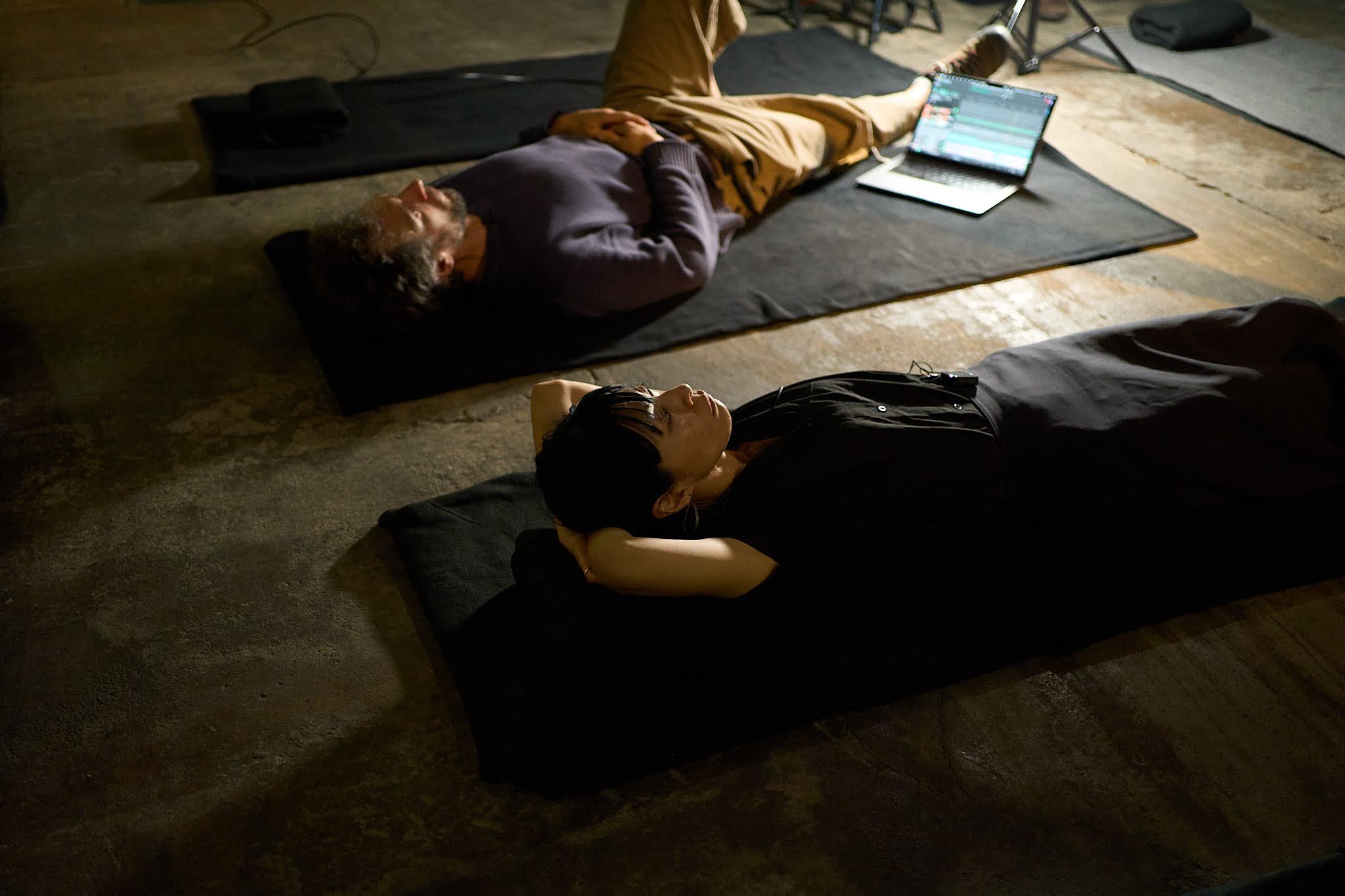
On the "Sleepable Listening Session" format
Joanna: Inviting people to actually fall asleep during your work removes the obligation to be a “good, attentive audience”. What does it tell you, as a composer, when someone falls asleep?
Kyoka: Similar to how we define a “pathogen,” I think we can also question what we mean by a “good audience.” If sleep is allowed and requested, that is a success. In fact, if someone wakes up feeling good, that might be a very meaningful form of participation.
Joanna: Because you are entering even more rigorous phase research on this piece, inevitably there is something almost clinical about the controlled conditions. How do you balance the rigor of the research environment with the openness the artistic experience needs?
Kyoka: To be honest, this is partly a clinical experiment as well as a concert. By creating controlled conditions, I hope to observe a clearer relationship between sound and the body.